
A fragment the size of a grain of sand, striking a compressor wheel spinning at 150,000 RPM, hits with the energy of a bullet. That’s turbocharger foreign object damage — FOD — and it’s one of the fastest ways to destroy a turbocharger.
FOD turns up in failed-turbo inspections all the time, and it’s always the same story: the turbo itself did nothing wrong. Something got in from the outside, and once it does, the damage is done in seconds. Worse, the replacement fails exactly the same way if nobody finds where the debris came from.
Common Causes of Turbocharger Foreign Object Damage
Debris reaches the turbo from two directions. The compressor side is the usual suspect. The turbine side is the one people forget to check.
Compressor side (intake):
- A torn or collapsed air filter passing fine dust. This is the slow version — dust erodes the leading edges of the blades over months until efficiency falls off a cliff.
- Loose clamps or cracked intake hoses shedding rubber and metal into the airstream.
- The classic shop error: a bolt, a nut, or a rag left in the intake tract during the last repair. That’s the fast version — one startup is all it takes.
- A damaged air filter housing letting unfiltered air bypass the element entirely.
Turbine side (exhaust):
- Fragments of a breaking-up catalytic converter or DPF.
- Broken exhaust manifold studs, loose gasket material, or chunks of carbon knocked loose during cleaning work.
- Pieces of a cracked exhaust manifold.
Notice the pattern: most compressor wheel damage causes trace back to the intake system, not the turbo. The turbo is the victim here, not the culprit — which is exactly why blaming the unit and fitting another one never fixes it.
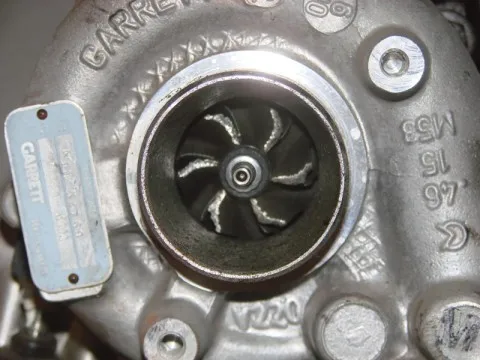
Turbo FOD Symptoms
- Nicked, bent, or missing blades on the compressor or turbine wheel — check the leading edges first, that’s where debris strikes.
- A sudden new vibration or whine that wasn’t there before the failure.
- Boost pressure drops with no oil leaks and no smoke — the damaged wheel simply can’t move air anymore.
- Bright impact marks or dents inside the compressor housing, where debris got flung outward.
Telling FOD apart from other failures is mostly about the pattern. Impact marks are random — a nick here, a bent blade there, no order to it. Fatigue cracks follow stress lines and look almost neat by comparison. Overspeed bursts the wheel outward or “tulips” it. If the damage looks random, suspect debris in the turbocharger intake or exhaust tract.
How to Prevent FOD
- Inspect the entire intake tract before the new turbo goes on — filter, hoses, clamps, housing, intercooler. Pull the hoses off and look inside; a glance from the outside doesn’t count.
- Flush or replace the intercooler. This is the step everyone skips, and it’s the one that kills the most replacement turbos. Debris from the failed unit is sitting in there right now, waiting for the first drive.
- Check the exhaust manifold, studs, and catalyst for anything loose or breaking apart — turbine wheel impact damage starts on this side.
- Cover every open port while you work, and count your tools when you’re done. The missing 10mm socket went somewhere.
- Fit a new air filter with every turbo replacement. It’s the cheapest insurance on this list.
FAQ
My compressor wheel has nicked blades. Can it be repaired?
Light nicks on the leading edge can sometimes be dressed by a specialist — but the wheel has to be rebalanced afterward, or the imbalance will take out the bearings next. Bent or missing blades mean replacement: the wheel at minimum, usually the full CHRA.
Is FOD covered by warranty?
Almost never. It’s classified as an external cause, not a manufacturing defect. Photos of a clean intake system, taken during installation, are the best protection for your claim.
How do I make sure debris doesn’t kill the replacement too?
Follow the checklist above — that’s what it’s for. Most repeat FOD failures come down to skipping step 2: the intercooler.
Replacing a FOD-damaged unit? Browse our VSR-balanced CHRAs or send us your specs for a quotation — and tell us what went through the last one, so we can help you stop it happening again.